DOI:https://doi.org/10.65281/732133
Article submission 5-01 –2026
Article acception 29-04-2026
Publication 31—05- 2026
BOUDERHEM Amel, BOUZAFFA Haoua, DJAÂ Amina, DJELLOUL DAOUADJI Soumia.
Email. bouderhem.amel@univ-ouargla.dz
-Ecosystem Protection Laboratory in Arides and Semi-Arides, University of Ouargla ;Algeria
-Educational laboratory of the Faculty of Natural and Life Sciences, University of Ouargla ; Algeria
-Gene Life Sciences (GLS), Biotechnology company in Sidi Bel Abbès, Algeria
Abstract:
Microbial fuel cells (MFCs) represent a promising bioelectrochemical technology for sustainable energy recovery coupled with wastewater treatment. In this study, aerobic halophilic bacteria isolated from Sebkhat Aïn Beïda (Ouargla, Algeria) were evaluated for their electrochemical performance in an MFC system. Aluminum electrodes were employed, generating a stable electrical potential of approximately 550 mV. Six isolates were individually screened, revealing generally low extracellular electron transfer (EET) efficiency; however, one strain exhibited markedly enhanced electroactivity, with a maximum voltammetric signal of 612 mV. Phylogenetic characterization based on 16S rRNA gene sequencing identified this strain as belonging to the genus Salinivibrio. Biofilm formation by Salinivibrio sp. on both anodic and cathodic surfaces was found to be a critical factor governing electron transfer and current generation. Electrical performance was normalized to reactor volume, which may partially account for variability in power output interpretation. Furthermore, the application of Salinivibrio sp. in sterile wastewater under controlled in vitro conditions significantly improved electricity production. These findings highlight the potential of halophilic electroactive bacteria in MFC applications and emphasize the importance of operational parameters, including aeration and substrate homogeneity, in optimizing bioelectrochemical system performance..
Keywords: Microbial fuel cell; Bioelectrochemistry; Extracellular electron transfer; Saltivibrio sp.; Halophilic bacteria; Biofilm-mediated electron transfer
1.Introduction
Fossil fuels, comprising coal, natural gas, and oil, were formed from the remains of deceased flora and fauna that underwent compression and thermal alteration over millions of years due to overlying sedimentary and rock layers . ]1[These fossil fuels can generate high-efficiency energy to operate vehicles, electronic devices, and support daily human activities ] 2[]3[. Nonetheless, their limited availability renders them unsustainable energy sources. Therefore, there is a necessity for renewable and sustainable fuels to supplant fossil fuels and advance a contemporary industrial civilization ]4[]5[.
The microbial fuel cell exemplifies an eco-friendly method for power generation while concurrently treating wastewater, facilitating the reduction of chemical oxygen demand and electrical energy densities ]6[]7[. Electroactive bacteria significantly influence many surroundings by establishing electrical connections with other cells and minerals at their exterior surfaces or by reducing soluble extracellular redox-active compounds, including flavins and humic chemicals ]8[. A burgeoning corpus of research underscores their significant phylogenetic variety and demonstrates that these germs are integral to several biogeochemical cycles, as well as to the gut microbiome, anaerobic waste digesters, and metal corrosion ]9[]10[.. The objective of this study is to identify indigenous electroactive bacteria and to construct a bacterial biopile.
2. Methodology
2.1. Sampling
Water samples were initially collected from the saline lake (Sebkha) located in Aïn Beïda. Sampling was performed randomly using a sterile spatula at a depth of approximately 20 cm. The collected sample was then transferred into a sterile glass flask to avoid contamination.
2. 2. Physico-chemical analyses
Conductivity quantifies a solution’s capacity to facilitate the flow of electric charges, which is contingent upon the mobility of ions.
The pH measurement relies on the potential difference between a reference electrode and an indicator electrode responsive to H⁺ ions, with the resultant potential translated to pH using a pH meter.
3. Microbiological Analysis
3.1. Isolation of aerobic bacteria and preparation of biofuel cell reactors
3.2. Isolation of electroactive bacteria
The isolation of electroactive strains is conducted using biopiles seeded with aerobic bacteria sourced from Sebkhat Aïn Beïda. Bacteria adhered to the surfaces of the aluminum electrodes are swabbed, followed by isolation on Chapman agar and salt agar. The plates are incubated for 96 hours at 30 degrees Celsius. The colonies that emerge are subjected to multiple rounds of purification under identical conditions.
3.3. Strain selections
Precultures were established by inoculating two colonies from each purified strain into 50 mL of saline BN medium to identify strains with the highest electroactive potential. The strains included S1, S2, S3, and S4. Cultures were maintained at 30 °C with agitation at 150 rpm for 48 hours. The bio-batteries were subsequently constructed using 150 mL of saline BN medium, incorporating aluminum electrodes with a surface area of 35 cm² (5 cm × 7 cm). Cultures were maintained at 30 °C with agitation at 100 rpm for a duration of 10 days.
3.4.Identification of selected strain
3.4.1. Morphological characterization
The macroscopic analysis of isolated colonies is a crucial initial step in their characterization, aiding in the identification process. A variety of phenotypic factors are taken into account, including: surface characteristics, elevation, and pigmentation. The microscopic assessment of the colony morphology is conducted using Gram staining 1]1[.
3.4. Identification of selected strain
Bacterial isolates were identified using direct nucleotide sequencing of the 16S rRNA gene, followed by a comparison of nucleotide identity with sequences available in the international Gen Bank database. The PCR process utilized universal primers (27F: 5′-AGA GTT TGA TCC TGG CTC AG-3’ and 1492R: 5′-CCG TCA ATT CCT TTG AGT TT-3’). The resultant DNA pellet was air-dried, re-suspended in 15 μl of formamide, and subsequently analyzed with a 3730 XL Genetic Analyzer Capillary Array (Applied Biosystems). The sequences were examined using CHROMAS PRO software. Isolates were identified by comparing sequences to those in the GeneBank database with NCBI’s BLAST tool (accessible at https://blast.ncbi.nlm.nih.gov/Blast.cgi), according to percent homology with reference strains.
3.5. Biofuel cell optimization
The electroactive capacity of isolate S1 and the effect of electrode surface area were investigated using microbial fuel cells equipped with aluminum electrodes of different sizes (16, 35, and 70 cm²). Pre-cultures were grown in saline BN medium at 30°C under agitation, then transferred into glass reactors and incubated for 10 days. Biomass growth and electrochemical activity were monitored daily by measuring optical density (OD600) and electrical current production.
3.6. Wastewater Treatment
Precultures were established using a combination of the two strains, S7 and Sab, in 400 cc of BN saline medium. The cultures were incubated at 30°C with shaking at 100 rpm for a duration of 48 hours. Subsequent to incubation, the cultures underwent centrifugation at 3000 rpm at 4°C. The bacterial pellet was collected and subsequently washed multiple times with sterile saline to eliminate any remnants of the growing media. The cleaned bacterial cells were subsequently resuspended in 10 mL of distilled water. The solution was subsequently introduced into liquid cultures containing 200 cc of sterile whey, which were maintained at room temperature (35°C) for a duration of 12 days. During the experiment, voltage measurements are conducted every day with a voltmeter.
4. Results and discussion
4.1 Characterization of sample
Sample SA exhibits a mildly alkaline pH of 8.0 and an elevated conductivity of 132 mS/cm, indicating significant concentrations of dissolved salts. The results unequivocally demonstrate that the two samples originate from settings with varying salinity, potentially influencing the development and electroactive performance of the isolated bacteria.
4.2. Microbiological Analyses
4.2.1. Biofuel cells
Table 1: Potential of aerobic biofuel cells
| Biofuel cell | SB BN | SB BN saline |
| aluminum electrodes | 106,8±0.2mV | 491m±0.12V |
Table 1 indicates that the maximum electric current varies among biofuel cells using aluminum electrodes, with the greatest measurement recorded in the aerobic saline SB BN biofuel cell (491 mV). Nonetheless, the biofuel cells using carbon electrodes and those employing copper electrodes generated no electric current. Halophilic bacteria and haloarchaea inhabit high-salinity environments, predominantly residing in salt marshes, salt lakes, and salt mines, where salinity levels significantly exceed those of the oceans (3.5% NaCl) ]12[. Electroactivity is generally prevalent across all bacterial groups ]13[.
4.2.2.Isolation and selection of electroactive bacteria
Given that the aerobic halophilic bacteria in the sample produced the highest electrical current value relative to the other bacterial strains, six separate bacterial strains were recovered from the preceding stack electrodes S1, S2, S3, and S4.
Fig1: Evolution of electrical current generated by the four bacterial strains
The measured voltages demonstrate significant heterogeneity in electroactive behavior among the six isolates. Strain S1obviously surpasses the others due to its superior electrochemical activity, reaching a maximum of 601 mV on Day 2, followed by consistent current generation, measuring 513 and 503 mV on Days 4 and 5, respectively. This behavior indicates a quick acclimatization of S1 to the electrode surface, effective biofilm development, and subsequent steady electron transmission between bacterial cells and the electrode.
Bacteria in the electrolyte migrate to the electrode and aggregate into a cohesive mass termed the electroactive biofilm ]15[. Microbial diversity facilitates various electron transfer pathways, enhances adaptability to diverse fuels, and improves fuel cell stability ]16[. Electroactive bacteria facilitate the autonomous production of electrical signals without requiring supplementary chemical mediators ]17[. Proteomic examination and electrochemical investigations demonstrated that the matrix comprises redox-active proteins, including MTRC and OMCA, as well as flavins ]18[.
4.3.1. Phenotypic Characterization of Selected Strain
Microscopic analysis of bacterial cells from the isolated strains indicates that they are Gram-positive cocci. The cells are organized randomly, with sporadic pairings observed. Biochemical assays indicate that these bacteria are catalase-negative, oxidase-negative, and ONPG-positive, demonstrating β-galactosidase activity.
4.3.2. Genetic Identification
The analysis of the 16S rRNA gene sequence indicated the strain exhibiting the greatest electrogenic activity. The S1 bacterial culture was classified as Salinivibrio sp. The genus Salinivibrio comprises moderately halophilic bacteria from the Vibrionaceae family. Certain species, such as Salinivibrio EAGSL, are capable of producing currents in microbial fuel cells. S. EAGSL is a salt-tolerant and electroactive bacterium, endowing it with the distinctive capability to connect energy production and salt tolerance in microbial fuel cells ]19[.
5. Evaluation of the effect of electrode surface area and biomass on fuel cell potential
The followingfigure illustrates the progression of biomass and the potential of various bacterial cells.
Table3:Variation of electrical potential with Time Table2:Variation of biomass with Time
| Microbial fuel C | Microbial fuel B | Microbial fuel A | voltage /days |
| 8±0.06 | 24±0.03 | 43±0.39 | 1 |
| 11±0.13 | 26±0.23 | 7±0.23 | 2 |
| 20±0.23 | 16±0.01 | 8±0.01 | 3 |
| 8±0.08 | 21±0.14 | 48±0.03 | 4 |
| 43±0.19 | 92±0.42 | 47±0.022 | 5 |
| 20±0.23 | 17±0.13 | 28±0.41 | 6 |
| 32±0.5 | 43±0.33 | 38±0.03 | 7 |
| 207±0.01 | 555±0.01 | 445±0.14 | 8 |
| 311±0.23 | 478±0. 07 | 460±0.55 | 9 |
| 287±0.02 | 612±0.08 | 408±0.05 | 10 |
| 260±0.11 | 475±0.33 | 412±0.12 | 11 |
| 86±0.13 | 480±0.54 | 461±0.27 | 12 |
| Microbial fuel C | Microbial fuel B | Microbial fuel A | OD /days |
| 0.42±0.05 | 0.42±0.1 | 0.43±0.13 | 1 |
| 0.6±0.23 | 0.49±0.6 | 0.48±0.12 | 2 |
| 0.68±0.23 | 0.62±0.02 | 0.72±0.53 | 3 |
| 1.02±0.38 | 1.09±.0.23 | 1.07±0.09 | 4 |
| 0.86±0.33 | 0.9±0.02 | 0.96±0.42 | 5 |
| 1.47±0.52 | 1.31±0.03 | 1.6±0.15 | 6 |
| 0.82±0.03 | 0.89 | 0.78±0.33 | 7 |
| 0.7±0.16 | 0.81±0.03 | 0.71±0.13 | 8 |
| 1.1±0.03 | 1±0.6 | 0.85±0.5 | 9 |
| 0.9±0.0.8 | 0.85±0.13 | 0.99±0.11 | 10 |
| 0.93±0.5 | 1.05±0.83 | 0.9±0.09 | 11 |
| 0.98±0.46 | 0.87±0.431 | 0.86±0.17 | 12 |
The establishment and progression of electroactive biofilms on biopile electrodes were monitored from day 1 to day 13. On day 1, the bacteria adhered to the electrode surface by non-covalent interactions and subsequently established a permanent connection through the synthesis of extracellular polymers that functioned as a form of “adhesive” ]20[. Beginning on day 2, the cells underwent division, resulting in the formation of microcolonies ]21[. This continual cellular division led to the development of continuous films, exhibiting intricate three-dimensional structures by day 7, with peak optical densities of 1.6, 1.31, and 1.47 for biopiles A, B, and C, respectively. Consequently, electrical current escalated alongside biomass, attaining its peak in biopile B at 612 mV, indicating a clear relation between microbial growth and electroactivity ]22[. Between days 7 and 8, the optical density in biopile A diminished to 0.78, indicating that, due to age or stress within the biofilm, certain bacteria reverted to the planktonic condition. Between days 8 and 13, both current and optical density exhibited relative stability; hence, electroactive bacteria continued to thrive in the biofilm despite aging.
The results indicate that electric current is independent of electrode surface area, as biopile A does not yield the maximum electric current despite its larger surface area, as noted by ]23[]24[,“The oxidation current intensity is frequently standardized relative to the reaction volume rather than the electrode surface area.”
6. Wastewater Treatment Test
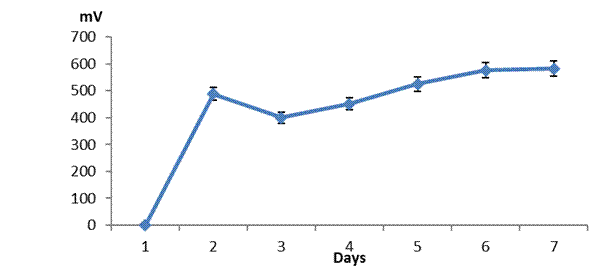
Fig2: Electrical current production in whey as a function of time.
Stain Salinivibrio sp. exhibits an initial lag period on day 1, during which no current is generated, attributable to its acclimatization to the environment. From day 1 to day 3, the electrogenic synthesis of Salinivibrio increases rapidly to 450 mV, attributed to the efficient absorption of nutrient-rich lactoserum ]25[ ]26.[. From day 3 to day 7, its activity diminishes due to environmental depletion and the conclusion of the exponential phase. On day 9, the current rises once more, reaching approximately 517 mV, indicating enhanced metabolic adaptability and improved utilization of the remaining resources ]22[.
Conclusion
This study highlights that the formation of electroactive biofilms on biopile electrodes occurs in a systematic process, progressing from early microbial adhesion to the production of mature three-dimensional structures. The proliferation of biofilm directly regulates electrical current generation. This research reveals the presence of halophilic electroactive bacteria, enhancing our understanding of their functions in biogeochemical cycles and trophic interactions. A decrease in optical density following peak growth indicates either biofilm aging or exposure to unfavorable environmental conditions, but the persistence of electroactive bacteria demonstrates their resilience. These findings significantly enhance the discourse over the speculative function of electroactivity in the genesis of life. Moreover, the potential of extremophilic bacteria to synthesize chemical molecules from electrical current presents extensive opportunities for biotechnological applications. The present generation appears to rely more on biofilm density and activity than on electrode surface area, offering insights for the improvement of microbial fuel cells and other bio-electrochemical systems.
REFERENCES
- 1.Christwardana, M., Frattini, D., Accardo, G., Yoon, S. P., & Kwon, Y. (2018). Optimization of glucose concentration and glucose/yeast ratio in yeast microbial fuel cell using response surface methodology approach. Journal of Power Sources, 402, 402–412. https://doi.org/10.1016/j.jpowsour.2018.09.068
- Hardman Scott Shiu Eric b, 2016 Comparing high-end and low-end early adopters of battery electric vehicles Transportation Research Part A: Policy and Practice V 88, , p40-57.https://doi.org/10.1016/j.tra.2016.03.010
- . Microbial fuel cells, a renewable energy technology for bioelectricity generation: A mini-review, Electrochemistry Communications, 125,107003. https://doi.org/10.1016/j.elecom.2021.107003
- Smida, H. (2017). Modulation de l’interface entre biofilms microbiens électroactifs et surface d’électrode : modifications de surface et effets de milieux [Thèse de doctorat, Université de Rennes 1]
- Sonawane et al., 2017. Understanding Tissue-Specific Gene Regulation. Cell Reports 21, 1077–1088 DOI: 10.1016/j.celrep.2017.10.001
- Benghernit,M.Kameche,M.Zerhouni,F.Z,Krim,F.Z,Sahraoui,T,Innocent,C.(2022). The study of the performance of a biological fuel cell: A progress towards the improvement of low electrical bioenergy output by using an amplification system .Biotechnology Letters, 44(12), 1359-1378. https://doi.org/10.21203/rs.3.rs-1292398/v1
- Massazza, D. A., Busalmen, J. P., & Romeo, H. E. (2025). Decoupled respiration in electro-active bacteria. Communications Biology, 8, Article 692. https://doi.org/10.1038/s42003-025-08125-5.
- Ifeomas, A., Ajibade, O., Anthony, I. O., &Tongret, D. A. C. A. (2024). Microbial analysis of water obtained from overhead tanks in Karu, Nasarawa State, Nigeria. Journal of Systematic and Modern Science Research (JSMSR), 4(9), 19–28. https://berkeleypublications.com/bjsmsr/article/view/162
- Lovley, D. R, and Holmes, D.E. (2022). Electromicrobiology: the ecophysiology of phylogenetically diverse electroactive microorganisms. Nature Reviews Microbiology, 20(1), 5-19. DOI: 10.1038/s41579-021-00597-6
- Liu, X., Wang, Y., & Zhang, H. (2025). Role of electroactive microbial communities in microbial fuel cells: Current advances and prospects. Bioengineered, 16(2), 103-119. https://doi.org/10.1080/17597269.2025.2493416
- Tou-Dallil, I. (2021). Etude des propriétés électroactives des biofilms biologiques : application à la génération de l’électricité (Doctoral dissertation, Université M’hamed Bougara Boumerdès : Faculté des sciences). https://dspace.univ-boumerdes.dz/items/e3a84435-2137-4944-97af-e44fa71fe5d5
- Tilahun, A ; Haddis, S ; Teshale, A ; &Hadush, T. (2016). Review on biofilm and microbialadhesion. Int J MicrobiolRes, 7(3),63-73. DOI:10.5829/idosi.ijmr.2016.63.73
- Mier, A.A.; Olvera-Vargas, H.; Mejía-López, M.; Longoria, A.; Verea, L.; Sebastian, P.J.; 2021.Arias, D.M. A Review of Recent Advances in Electrode Materials for Emerging Bioelectrochemical Systems: From Biofilm-Bearing Anodes to Specialized Cathodes. Chemosphere , 283, 131138. https://doi.org/10.1016/j.chemosphere.2021.131138
- Le Ber, F. (1964). Electrochemical study in the molten sodium acid sulphate-potassium acid sulphate eutectic; Etude electrochimique dans l’eutectique fondu sulfate acide de sodium-sulfate acide de potassium.
- Gaffney, E. M., Simoska, O., & Minteer, S. D. (2021). The use of electroactive halophilic bacteria for improvements and advancements in environmental high saline biosensing. Biosensors, 11(2), 48. https://doi.org/10.3390/bios11020048.
- Salvin, P. (2012). Etude des biofilms électroactifs issus des milieux humides de la Guyane Française : application aux piles à combustible microbiennes (Doctoral dissertation, Antilles-Guyane). https://theses.hal.science/tel-04824528.
- Karuppiah, T.; Uthirakrishnan, U.; Sivakumar, S.V.; Authilingam, S.; Arun, J.; Sivaramakrishnan, R.; Pugazhendhi, A. Processing of Electroplating Industry Wastewater through Dual Chambered Microbial Fuel Cells (MFC) for Simultaneous Treatment of Wastewater and Green Fuel Production. Int. J. Hydrogen Energy 2022, 47, 37569–37576. https://doi.org/10.1016/j.ijhydene.2021.06.034
- Hu, Y., Han, X., Shi, L., & Cao, B. (2022). Electrochemically active biofilm-enabled biosensors: Current status and opportunities for biofilm engineering. Electrochimica Acta, 428, 140917. https://doi.org/10.1016/j.electacta.2022.140917
- Gaffney, E. M., Simoska, O., & Minteer, S. D. (2021). The use of electroactive halophilic bacteria for improvements and advancements in environmental high saline biosensing. Biosensors, 11(2), 48. https://doi.org/10.3390/bios11020048
- Cao, Y ; Mu, H ; Liu, W ; Zhang, R ; Guo, J ; Xian, M ; et Liu, H. (2019). Electricigens in the anode of microbial fuel cells: pure cultures versus mixed communities. Microbial cell factories, 18(1), 114. DOI: 10.1016/j.apenergy.2016.09.074.
- Godain, A., Haddour, N., Fongarland, P., & Vogel, T. M. (2022).Bacterial competition forthe anode colonization under different external resistances in microbial fuel cells. Catalysts, 12(2), 176.https://doi.org/10.3390/catal12020176
- Alotaibi, G. F., et Bukhari, M. A. (2021). Factorsinfluencingbacterial biofilm formation and development. Am. J. Biomed. Sci. Res, 12(6), 617-626 DOI: 10.34297/AJBSR.2021.12.001820
- Ancona, V.; Barra Caracciolo, A.; Borello, D.; Ferrara, V.; Grenni, P.; 2020. Pietrelli, A. Microbial Fuel Cell: An Energy Harvesting Technique for Environmental Remediation. Int. J. Environ. Impacts Manag. Mitig. Recover. , 3, 168–179. https://doi.org/10.1016/j.ijhydene.2021.06.034
- Capitaine, A.2017. Energy recovery from benthic microbial fuel cells (Doctoral thesis, University of Lyon).https://theses.hal.science/tel-02090785v1/file/these
- Yoo, Z ; Li, J ; Wang, Y ; Wu, D ; Li, F ;& Song, H. (2023). Advances in mechanisms and engineering of électroactive biofilms. Biotechnologiy Advances, 108170. https://doi.org/10.3390/app132312760
- inlu Wu, Jingwen Zhang, Maolian Hu, Wenjing Wei, Tianxiang Wei, Tao Gao. Micro‐ and Nano‐Scaled Microbial Electrochemical Biosensing. Small Methods 2025, 176 https://doi.org/10.1002/smtd.202501370
- Xu Han, Christine K. Payne. Gold Ions Hyperpolarize Bacteria. Bioelectricity 2023, 5 (2) ,109-115. https://doi.org/10.1089/bioe.2023.0008