Digital Platforms and the Reconfiguration of Educational Interaction : An Analytical Study of Arabic Language Teaching through YouTube
Received: 11.02.2026 Accepted: 05.06.2026 Publishing: 19.07.2026
Safia Soultan Ph.D (1)
Linguistic Studies Educational Linguistics
University Of Mohamed Khider -Biskra- (Algeria)
Email : soltane-safia@univ-eloued.dz
Nadjat AbdellaouiPh.D (2)
Linguistic Studies ; Applied Linguistics
University Of Moulay Tahar University -Saida-(Algeria)
Email :Nadjat.abdellaoui@univ-saida.dz
Rawiya Hamza Ph.D (3)
Linguistic Studies Educational Linguistics
University of 20 Août 1955- Skikda – Algeria.
Email : rawiahamza2023@gmail.com
Abstract
This study explores the intersection between YouTube and applied linguistics by examining the platform’s role in teaching Arabic as a representative model of contemporary digital education. It investigates the concepts of teaching and Arabic language pedagogy while highlighting the educational affordances of YouTube in supporting self-directed learning and fostering learners’ linguistic competence. Adopting a descriptive-analytical approach, the study analyzes the content of Hidaya Ibrahim’s YouTube lectures, Content Analysis and Skilled Analysis, to identify the instructional strategies employed, assess the nature of teacher–learner interaction, examine the integration of traditional and digital instructional resources, and evaluate the extent to which these lessons meet the pedagogical requirements of e-learning. The findings indicate that YouTube provides an effective digital learning environment that contributes significantly to the development of Arabic language skills and promotes autonomous learning. Nevertheless, novice learners require pedagogical guidance to select instructional content that corresponds to their linguistic proficiency and educational needs, thereby maximizing the effectiveness of the learning process.
Keywords :YouTube; Applied Linguistics; Arabic Language Teaching; E-learning; Self-directed Learning; Language Skills.
Introduction
The contemporary era has witnessed unprecedented and continuous advances in digital technologies, profoundly transforming communication, information exchange, and knowledge dissemination across geographical and temporal boundaries. These developments have accelerated the growth of information and communication technologies (ICT), creating new opportunities for innovation in various sectors, particularly education. Consequently, educational institutions and instructors have increasingly adopted digital technologies to deliver instructional content through electronic resources, administrative platforms, and online communication tools, thereby facilitating continuous interaction between teachers and learners.
Digital education has consequently emerged as a prominent mode of contemporary teaching and learning. In the field of Arabic language education, instructors increasingly rely on the Internet, digital platforms, educational applications, and social media to enhance learning experiences. Among these platforms, YouTube has become one of the most influential educational environments, enabling educators to deliver instructional content to both enrolled students and independent learners worldwide while providing learners with flexible access to educational materials that reinforce their knowledge and language skills. Against this backdrop, the present study, entitled YouTube and Applied Linguistics : Exploring Their Relationship through Arabic Language Teaching, investigates the pedagogical role of YouTube within the framework of applied linguistics and Arabic language education.
I. Theoretical Framework
1. The Concepts of Teaching and Instruction
1.1. Teaching:Teaching has been defined from multiple educational perspectives. According to Abdellatif El Farbi and his colleagues, “teaching is the process of transmitting knowledge and information from the educational institution to the learner within a structured instructional context. It encompasses a set of procedures and activities implemented by the teacher to facilitate the acquisition of knowledge and skills, with the aim of producing expected changes in learners’ behavior through the interaction of multiple educational factors“ [1]; This definition highlights teaching as a purposeful and systematic process through which educators organize learning experiences to promote learners’ cognitive, practical, and affective development.
Teaching has also been described as “the deliberate design or engineering of an instructional situation in such a way that it facilitates learning, or as the management of learning under the supervision of the teacher” [2]; This perspective emphasizes that teaching is neither spontaneous nor incidental; rather, it is a carefully planned pedagogical process in which the teacher assumes the primary responsibility for organizing, guiding, and facilitating learners’ educational experiences. In contemporary educational contexts, these experiences may occur in both conventional classroom settings and digital learning environments, including online educational platforms such as YouTube.
1.2. Instruction: Providing a comprehensive and universally accepted definition of instruction is a challenging task, as the concept has continuously evolved in response to changes in educational philosophies, societal needs, and pedagogical objectives”. Consequently, scholars have approached the concept from different theoretical perspectives, resulting in a variety of complementary definitions.
From a traditional perspective, instruction is defined as “the process of presenting facts and information to the learner’s mind.“[3]Although this definition reflects the conventional view of instruction as knowledge transmission, contemporary educational theories regard instruction as a more comprehensive and interactive process.
From a broader pedagogical perspective, instruction is viewed as “a noble human profession entrusted with the responsibility of preparing competent individuals who contribute positively to themselves and to society, while equipping learners with the knowledge, skills, values, and attitudes necessary for their personal and social development.[4]” This perspective emphasizes that instruction extends beyond the mere transmission of information to encompass the holistic development of learners through carefully planned educational experiences.
1.3. Distinguishing between Teaching and Instruction: Although the concepts of teaching and instruction are closely related and often used interchangeably, educational literature draws important distinctions between them. The most notable differences include the following[5] :
- Teaching is a broader educational process, whereas instruction refers to the set of pedagogical practices implemented by the teacher to translate instructional plans into classroom activities.
- Teaching aims to promote learners’ cognitive, practical, and affective development, while instruction primarily focuses on organizing and facilitating learning experiences that enable learners to achieve specific educational objectives.
- Teaching represents a systematic, planned, and goal-oriented educational process within which instructional activities are designed and implemented. By contrast, instruction concerns the organization of teaching strategies, learning resources, and classroom procedures to achieve intended learning outcomes.
- Teaching generally extends over a defined educational period, such as an academic year or a particular stage of schooling, whereas instruction is typically associated with specific classroom sessions conducted by the teacher within designated instructional time.
Within the context of the present study, these distinctions are particularly relevant. Dr. Hidaya Ibrahim performs an instructional role when teaching students in a formal classroom setting. However, through his YouTube channel, he assumes a broader teaching role by providing educational content to university students, novice instructors, and independent learners beyond the physical classroom. Unlike face-to-face instruction, which is restricted by institutional schedules and classroom settings, YouTube enables learners to access instructional materials asynchronously, allowing them to engage with lectures at their own pace and according to their individual learning needs.
2. Methods of Teaching Arabic
Among the most widely adopted approaches to teaching Arabic grammar are the deductive method, the inductive method, and the modified literary-text method.
2.1 The Deductive Method: The deductive method is “one of the oldest and most commonly used approaches in Arabic grammar instruction. It begins with the presentation of the grammatical rule, followed by examples and textual evidence that illustrate and reinforce its application. According to this approach, the rule itself constitutes the starting point of instruction, while examples serve to clarify and confirm its meaning”[6]. Although this method facilitates the memorization of grammatical rules, it has often been criticized for emphasizing rote learning at the expense of developing learners’ ability to apply grammatical knowledge effectively in authentic language use.
In classroom practice, the teacher first presents the grammatical rule in a clear and organized manner, usually by writing it on the board. This is followed by carefully selected examples that illustrate the rule and enable learners to identify its linguistic features before producing similar examples independently. The lesson typically concludes with a series of classroom or homework exercises designed to assess learners’ understanding and their ability to apply the rule appropriately.
The deductive method generally proceeds through four sequential stages:
- Introduction: The lesson begins with a brief review of previously acquired knowledge related to the new topic. Through targeted questions, the teacher activates learners’ prior knowledge, establishes connections with the upcoming lesson, and creates an appropriate learning context.
- Presentation of the Rule: The teacher explicitly introduces the grammatical rule in a clear and accessible form, ensuring that it is visible to all learners. At this stage, the rule constitutes the conceptual framework upon which subsequent learning activities are based[7].
- Illustrative Examples: The teacher presents representative examples that exemplify the grammatical rule and encourages learners to analyze them through guided questions. These examples function as linguistic models from which learners infer additional applications of the rule until its various dimensions are fully understood.
- Application:“The final stage focuses on the practical application of the grammatical rule through a variety of learning activities, including written exercises, oral practice, quizzes, and homework assignments[8]“. Learners are required to identify, analyze, or produce grammatical structures in different contexts, while the teacher provides corrective feedback to reinforce accurate language use and address misconceptions.
2.2 The Inductive Method:The inductive method represents a pedagogical alternative to the deductive approach and constitutes one of the principal methods employed in teaching Arabic grammar. “Unlike the deductive method, which begins with the presentation of the grammatical rule, the inductive method enables learners to infer the rule through the analysis of carefully selected examples provided by the teacher[9]“. In this approach, grammatical principles emerge progressively from learners’ observation, comparison, and interpretation of linguistic data rather than being presented explicitly at the outset.
This method is “commonly associated with the educational philosophy of the German educator Johann Friedrich Herbart, whose instructional model consists of five successive stages: introduction, presentation, association, generalization, and application”[10].
- Introduction: The lesson begins by preparing learners for the new topic, stimulating their motivation to learn, and activating their prior knowledge to facilitate meaningful engagement with the lesson[11].
- Presentation: This stage constitutes the core of the lesson. The teacher presents a variety of examples and textual evidence using appropriate instructional resources. Learners first examine the material independently, after which the teacher clarifies unfamiliar vocabulary, guides oral reading, and encourages discussion through targeted questions. The linguistic structures relevant to the grammatical rule are highlighted to direct learners’ attention and prepare them for analytical observation[12].
- Association (Comparison): During this stage, learners compare the selected examples, identify similarities and differences, and establish relationships among the linguistic structures under investigation. This comparative analysis enables them to organize information logically and prepares them to formulate the underlying grammatical principle.
- Generalization: Guided by the teacher, learners formulate the grammatical rule based on the patterns identified during the previous stages. The finalized rule is then recorded as a concise generalization of the observed linguistic phenomena.
- Application: The final stage focuses on consolidating learners’ understanding through practical activities, including oral and written exercises that require the application of the newly acquired grammatical rule in different communicative contexts[13].
In contrast to the deductive method, which presents grammatical rules before illustrating them with examples, the inductive method proceeds from specific linguistic examples to general grammatical principles. This learner-centered approach actively engages students in observation, comparison, analysis, and inference, thereby promoting critical thinking and facilitating deeper conceptual understanding. By encouraging learners to construct grammatical knowledge through guided discovery, the inductive method contributes to more meaningful and lasting learning outcomes than approaches based primarily on the direct presentation of rules.
2.3 The Modified Literary Text Method: The modified literary text method is “based on teaching Arabic grammar through a coherent and meaningful text rather than through isolated and artificially constructed examples”[14]. Instead of presenting disconnected sentences, this approach introduces grammatical structures within an integrated textual context, allowing learners to observe language as it naturally occurs in authentic discourse. “In the educational literature, this method is also referred to as the connected-text approach, the supporting-text method, or the integrated-text method“[15].
Unlike the deductive and inductive methods, which rely primarily on separate grammatical examples, the modified literary text method employs a complete literary or informational text as the foundation for grammatical instruction. Although it evolved as an adaptation of the inductive method, both approaches pursue the same instructional objectives ; the principal distinction lies in the use of a coherent text as the primary pedagogical resource for presenting and analyzing grammatical phenomena.
The instructional procedure generally follows five sequential stages:
- Introduction: As in the previous methods, the lesson begins by activating learners’ prior knowledge and preparing them for the instructional topic.
- Text Presentation: The teacher presents the selected text, ensuring that it is read clearly and accurately. Key words, expressions, or grammatical structures relevant to the lesson are highlighted to direct learners’ attention toward the target linguistic features.
- Text Analysis: Learners examine the content of the text under the teacher’s guidance, exploring both its linguistic characteristics and its educational or cultural significance[16]. Through guided discussion, attention is progressively directed toward the grammatical structures embedded in the text, creating a meaningful transition from textual comprehension to grammatical analysis.
- Rule Formulation (Generalization): Based on their analysis of the text, learners formulate the grammatical rule with the teacher’s guidance. The finalized rule is then presented as a generalization derived from authentic language use.
- Application: Learners consolidate their understanding by applying the grammatical rule through a variety of activities, including answering the teacher’s questions, producing original sentences, and completing contextualized exercises that reinforce both grammatical accuracy and communicative competence.
Although the deductive, inductive, and modified literary text methods differ in their instructional procedures, they ultimately pursue the same educational objective: facilitating learners’ understanding of Arabic grammar. Effective language instruction therefore requires teachers to adopt a flexible pedagogical approach that combines multiple teaching methods according to learners’ needs, thereby enhancing comprehension, participation, and meaningful language acquisition.
3. YouTube and Its Educational Affordances
YouTube is one of the world’s most widely used social media platforms and constitutes the focus of the present study. Duffy (2008) defines YouTube as “the world’s most popular video-sharing website, enabling users to upload, view, and share a wide variety of video content”[17]. As a digital platform, YouTube allows users not only to upload, watch, and comment on videos but also to disseminate educational content to a global audience. According to the Alexa website rankings, YouTube has consistently ranked among the world’s most visited websites, reflecting its growing influence as a medium for communication, information exchange, and education[18].
Beyond its social networking functions, YouTube has become an important educational platform that supports teaching and learning across diverse disciplines. Its pedagogical value can be summarized as follows:
- Supporting instruction across multiple disciplines: YouTube provides educational resources in a wide range of fields, including language learning, natural sciences, mathematics, physics, and other academic disciplines, thereby offering learners access to diverse instructional materials[19].
- Promoting inquiry-based learning: Teachers can encourage learners to search for relevant educational videos, critically evaluate their content, compare different explanations of the same topic, and produce analytical reports, thereby fostering research skills and critical thinking.
- Providing diversified learning resources: The platform offers multiple explanations of the same topic through different instructional styles and pedagogical approaches. This diversity enables teachers to select learning materials that best correspond to their instructional objectives and learners’ needs[20].
- Enhancing learner engagement through multimodal instruction: Educational videos integrate visual and auditory elements that capture learner’s attention and facilitate comprehension. Well-designed instructional videos, supported by effective presentation techniques and appropriate teaching aids, contribute to increased learner motivation and sustained engagement.
- Supporting teachers and fostering self-directed learning : YouTube reduces teachers’ instructional workload by providing readily available educational resources while simultaneously enabling learners to study independently at their own pace. Through digital technologies, learners can acquire knowledge and develop skills according to their individual learning preferences and abilities.
- Facilitating language learning through authentic input: One of YouTube’s most significant educational advantages lies in its capacity to expose learners to authentic language produced by native or proficient speakers. Educational channels typically address the major components of language learning, including pronunciation and phonetics, morphology, vocabulary and semantics, grammar and syntax, as well as integrated language use in meaningful communicative contexts.
Despite these educational advantages, YouTube should be regarded as a complementary instructional resource rather than a substitute for the teacher. Although the platform provides learners with free and flexible access to high-quality educational materials, particularly for those pursuing independent learning, effective learningespecially during the initial stages of language acquisitioncontinues to require pedagogical guidance. Teachers play a central role in selecting appropriate learning resources, contextualizing instructional content, clarifying complex concepts, and supporting learners throughout the educational process. Furthermore, YouTube enables educators to present instructional content that may be difficult to deliver within the constraints of conventional classroom instruction due to limited time, insufficient educational resources, or the practical challenges associated with demonstrating complex scientific or linguistic concepts.
4. Teaching and Learning through YouTube
As a social media platform, YouTube extends beyond its function as a video-sharing website to serve as an interactive educational environment. According to Al-Maqdadi (2013), social networking platforms are web-based applications that enable users to create public profiles, exchange information, and communicate within a digital network ( ). Within this context, YouTube has become an important educational tool that enables teachers to disseminate instructional content to both their own students and a broader community of learners and educators.
The effective integration of YouTube into educational practice may be achieved through several pedagogical strategies, including:
- Creating dedicated educational channels for specific subjects or academic levels, with instructional content organized into thematic playlists according to course topics.
- Producing original instructional videos in which teachers explain course content, present demonstrations, or document students’ presentations and discussions, thereby creating reusable learning resources.
- Assigning video-based learning activities, whereby learners search for, evaluate, and compile educational videos related to specific topics, practical skills, or laboratory activities.
- Developing learners’ digital literacy by training them to use reliable online educational resources and digital reference tools that support independent learning and academic research.
These practices demonstrate that the successful educational use of YouTube requires careful instructional planning. Teachers should first establish an educational channel, define its target audience, and design high-quality instructional videos that correspond to learners’ educational needs. Video lessons may be recorded in classrooms, workplaces, or other appropriate environments using a variety of teaching strategies, including explanation, discussion, questioning, and interactive dialogue. Such practices not only facilitate classroom instruction but also provide open educational resources that benefit a wider community of learners and educators.
The present study examines the educational channel Hedaya Ibraheem as a representative case. Through this channel, Dr. Hidaya Ibrahim provides instructional content in Arabic language teaching for both native and non-native speakers. The recorded lectures enable students to revisit course materials whenever needed while simultaneously extending access to independent learners and novice instructors interested in Arabic language pedagogy.
In contemporary educational contexts, learners increasingly rely on digital resourcesincluding Wikipedia, educational platforms, and YouTubeto expand their knowledge, clarify difficult concepts, and support independent study. Consequently, one of the teacher’s essential responsibilities is to cultivate learners’ digital literacy by guiding them toward credible academic resources and training them to use digital technologies critically and effectively in educational and research contexts.
II. Empirical Framework
Content Analysis of Dr. Hidaya Ibrahim’s YouTube Lectures:Content Analysis and Skilled Analysis
1. Research Design: Selecting an appropriate research design is a fundamental requirement for any empirical investigation, as the choice of methodology depends on the nature of the research problem and the objectives of the study. Research methodology has been defined as “the systematic approach adopted by the researcher to investigate a particular phenomenon. Since research phenomena differ in their characteristics and scope, research methodologies likewise vary according to the nature of the phenomenon under investigation.“[21]
To address the research questions formulated in this study, a descriptive-analytical approach was adopted. This approach enabled the researchers to describe, interpret, analyze, and synthesize the educational practices observed in the selected YouTube lectures, thereby facilitating the identification of meaningful patterns and the formulation of well-founded conclusions. In addition, descriptive statistical procedures were employed to calculate frequencies and percentages, providing quantitative support for the interpretation of the findings.
2. Study Sample: A research sample is generally defined as “a representative subset of the target population that possesses the essential characteristics of the larger population. The primary objective of sample selection is to allow the researcher to generalize the findings obtained from the sample to the population from which it is drawn“.[22].
The sample for the present study consisted of 15 instructional units delivered by Dr. Hidaya Ibrahim through his YouTube educational channel, comprising a total of 38 video lectures. These lectures constitute the empirical corpus analyzed in this study.
3. Data Collection Instrument: The study employed systematic observation as its primary data collection instrument. Observation is defined as “a systematic process of watching, monitoring, and interpreting events or behaviors with a clearly defined purpose, requiring careful attention, accurate perception, and analytical reflection in order to identify and interpret the essential features of the phenomenon under investigation“[23]. Effective observation therefore requires the researcher to possess both methodological awareness and analytical competence to ensure the validity of the collected data.
The observation process involved a comprehensive examination of all 38 video lectures presented by Dr. Hidaya Ibrahim. Particular attention was devoted to analyzing the instructional strategies employed, the patterns of interaction between the instructor and learners, the pedagogical use of visual and instructional aids, and the extent to which digital technologies were integrated into the teaching process to enhance learner engagement and support effective instruction.
4. Statistical Data Analysis
Following the completion of data collection, the observational data were systematically coded, entered into a computerized database, and analyzed to generate the statistical results required for the study. Owing to the descriptive nature of the research, the analysis relied on descriptive statistical techniques, including frequency counts, percentages, and histograms.
- Frequency Counts : Frequency analysis was employed to determine the occurrence of the instructional activities observed in Dr. Hidaya Ibrahim’s YouTube lectures, as well as the frequency of the instructional and visual teaching aids used throughout the lessons.
- Percentages : Percentages were used to identify the relative distribution of the observed instructional activities and educational resources, thereby facilitating comparisons among the different categories and providing a clearer interpretation of the findings[24].
- Histograms : Histograms were utilized to present the distribution of the observed data graphically, allowing for clearer visualization and comparison of the frequencies associated with the different instructional practices identified during the analysis.
The use of these descriptive statistical techniques provided quantitative support for the qualitative observations, thereby enabling a more comprehensive and systematic interpretation of the instructional practices and educational resources employed in the analyzed YouTube lectures.
5. Results and Discussion
5.1 General Data
| Lecture Title | Targeted Language Skill |
| Vocabulary (Part 1) (20:22) | Speaking |
| Teaching Listening Skills (Parts 1–3) | Listening |
| The Audio-Lingual Method : A Practical Application in Second Language Teaching | Speaking |
| Modern Teaching Methods : The Conversation Method (Parts 1–3) | Speaking |
| Punctuation Marks | Writing |
| Expansion Skills (Parts 1–2) | Writing and Speaking |
| Summarization Skills | Speaking |
| Feedback Strategies in Second Language Teaching | Writing and Speaking |
| Teaching Writing to Non-Native Speakers of Arabic | Writing |
| Language Drills (Parts 1–4) | Writing |
| Teaching Reading Skills | Reading |
| Language Errors and Strategies for Addressing Them | Writing and Speaking |
| The Direct Method (Parts 1–4) with a Practical Demonstration | Listening and Speaking |
| The Grammar–Translation Method (Parts 1–4) | Reading and Writing |
Table 1. Distribution of instructional activities across Dr. Hidaya Ibrahim’s YouTube lectures.
| Language Skill | Frequency | Percentage (%) |
| Speaking | 7 | 36.84% |
| Writing | 7 | 36.84% |
| Reading | 2 | 10.52% |
| Listening | 2 | 10.52% |
Table 2. Frequency and percentage distribution of the language skills emphasized in Dr. Hidaya Ibrahim’sYouTube lectures.
Tables 1 and 2 show that speaking and writing were the most frequently emphasized language skills in Dr. Hidaya Ibrahim’s YouTube lectures. Each of these skills was observed seven times, representing 36.84% of the total instructional activities. In contrast, reading and listening each occurred twice, accounting for 10.52% of the observed activities.
These findings indicate that the instructional content of the analyzed lectures places greater emphasis on the productive language skillsparticularly speaking and writingthan on the receptive skills of reading and listening. This distribution reflects the pedagogical orientation of the channel toward developing learners’ communicative competence and their ability to use Arabic actively in both spoken and written contexts.
The relative distribution of these language skills is illustrated in the histogram presented below.
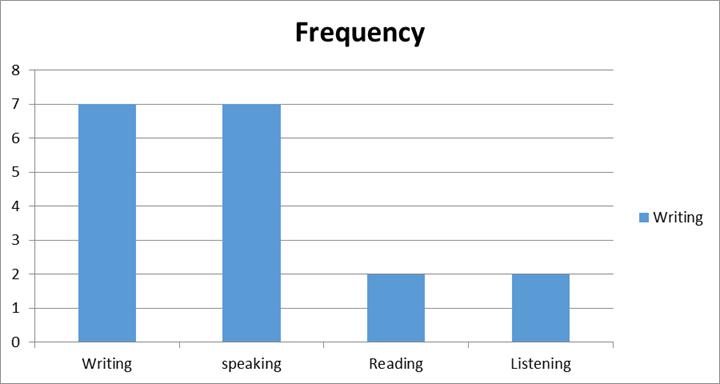
Figure 1. Frequency distribution of the language skills emphasized in Dr. Hidaya Ibrahim’s YouTube lectures.
5.2 Analysis and Interpretation of the Findings
The data presented above indicate that Dr. Hidaya Ibrahim’s instructional approach addresses the four fundamental language skills :reading, listening, speaking, and writing. However, given the scope of the present study and the large number of recorded lectures, it is neither practical nor necessary to analyze every instructional video individually.
As demonstrated in Tables 1 and 2, speaking and writing constitute the most frequently emphasized language skills in the analyzed lectures. Accordingly, the subsequent analysis focuses on representative lessons that best illustrate the instructional practices associated with these two skills. Specifically, the analysis examines the Vocabulary lesson as a model for the development of speaking skills, together with the Summarization Skills and Expansion Skills lessons as representative examples of writing instruction.
This purposive selection enables a more in-depth examination of the pedagogical strategies, instructional techniques, and learner engagement practices employed by Dr. Hidaya Ibrahim while remaining consistent with the overall distribution of language skills identified through the quantitative analysis.
- Speaking Skill :In the Vocabulary lesson, Dr. Hidaya Ibrahim emphasizes that vocabulary instruction should extend beyond merely explaining the meanings of words, distinguishing their phonological forms, or providing their equivalents in another language. Instead, he advocates a broader pedagogical perspective that moves beyond traditional vocabulary teaching, which often relies on presenting isolated word lists accompanied only by their translations into the learners’ first language. Such an approach, he argues, fails to equip learners with the ability to use newly acquired vocabulary accurately and appropriately in authentic spoken and written communication.
Accordingly, Dr. Ibrahim proposes a more comprehensive model of vocabulary instruction. This model begins with phonological recognition, proceeds to word formation and structural analysis, and then develops learners’ understanding of lexical meaning, semantic relationships with neighboring words, grammatical functions, and contextual usage. Ultimately, learners are encouraged to employ newly acquired vocabulary in a variety of communicative contexts rather than treating words as isolated lexical items ; To facilitate this process, the instructor incorporates a range of language practice activities designed to transform learners’ passive lexical knowledge into active vocabulary. From this perspective, effective language teaching seeks to minimize the gap between the vocabulary that learners recognize and the vocabulary they are able to use productively in speech and writing. Such instructional practice enables learners to recycle and consolidate lexical items through repeated communicative use, thereby enhancing both their spoken and written proficiency.
To illustrate this concept, Dr. Ibrahim presents a diagram divided into two sections: one representing the vocabulary learners know, and the other representing the vocabulary they actively use. He further reinforces this distinction by introducing two overlapping circles that differentiate passive vocabulary from active vocabulary, thereby demonstrating the gradual transition from lexical recognition to productive language use. He subsequently proceeds to discuss the pedagogical criteria for vocabulary selection, addressing the practical question : How should teachers determine which vocabulary items should be taught to learners ?
- Writing Skill
- Summarization Skills : In his lecture on Summarization Skills, Dr. Hidaya Ibrahim defines summarization as the ability to express extensive ideas concisely without compromising the overall meaning of the original text. He emphasizes that effective summarization is not merely a process of shortening a text but rather a cognitive skill that requires learners to identify and retain its essential ideas while eliminating secondary details; To develop this skill, Dr. Ibrahim proposes a sequence of practical strategies, including:
- conducting an initial rapid reading to gain a general understanding of the text ;
- avoiding excessive attention to unfamiliar vocabulary by inferring meaning from the overall context ;
- dividing the text into meaningful sections and identifying its principal ideas through keywords and topic sentences ;
- eliminating supporting details, opinions, evidence, arguments, and illustrative examples that are not central to the main message;
- connecting the main ideas coherently through appropriate linking expressions;
- producing the summary in the learner’s own words while preserving the original meaning.
During the lecture, one learner asked whether this procedure could also be applied to scientific texts. Dr. Ibrahim clarified that, unlike argumentative or general informational texts, scientific writing requires the retention of essential scientific evidence and findings. Consequently, such evidence should be condensed rather than omitted. He concluded that the summarization strategy presented in the lecture is particularly appropriate for argumentative texts, debates, and audiovisual materials such as educational videos.
- Expansion and Elaboration Skills: Dr. Ibrahim also addresses Expansion and Elaboration Skills, which constitute another important component of writing instruction. In this context, learners are encouraged to employ analytical and organizational strategies that enable them to expand a central idea, enrich it with relevant supporting information, and develop coherent written discourse.
A similar pedagogical approach is evident in his lecture on Feedback Strategies in Second Language Teaching, where corrective feedback extends beyond the correction of oral language errors to encompass learners’ written production. Feedback is systematically integrated into the evaluation of assignments, classroom exercises, examinations, and other written tasks, thereby supporting learners in improving both their linguistic accuracy and their overall writing proficiency.
Conclusion
This study examined the role of YouTube as a digital educational platform in the teaching of Arabic through a content analysis of Dr. Hidaya Ibrahim’s instructional lectures. The findings highlight the pedagogical potential of YouTube in supporting Arabic language instruction and promoting learner engagement within digitally mediated learning environments. The principal findings of the study can be summarized as follows:
Major Findings
- YouTube constitutes an effective platform for teaching Arabic when instructional content is delivered by qualified instructors or proficient speakers of the language.
- The platform effectively supports self-directed learning, enabling learners to study independently. Nevertheless, beginners require appropriate pedagogical guidance from teachers to help them select instructional materials that correspond to their language proficiency and educational level.
- Effective instruction through YouTube requires adequate technological infrastructure, including high-quality audio-visual equipment, reliable Internet connectivity, and appropriate instructional materials that facilitate learners’ comprehension of the educational content.
- Dr. Hidaya Ibrahim adopts a blended learning approach in delivering his lectures. His lessons are initially presented in face-to-face classroom settings, recorded by students, and subsequently uploaded to his YouTube channel. This practice allows enrolled students to review the lectures, enables absent learners to access missed content, and extends educational opportunities to a wider audience of Arabic language learners and instructors.
- Learners actively interact with the instructor through digital communication channels, including email and YouTube, by asking questions, seeking clarification, and submitting assignments, thereby enhancing communication beyond the traditional classroom environment.
- The instructional videos published on the channel are carefully selected according to the intended target audience and the specific language skill to be developed.
- The availability of recorded lectures on YouTube provides valuable opportunities for Arabic language learnersparticularly non-native speakersto review lessons at their own pace and reinforce their language learning.
- The findings further suggest that effective YouTube-based language instruction requires methodological diversity. Relying exclusively on a single teaching method is unlikely to address learners’ varying needs and may reduce the overall effectiveness of the instructional process.
Recommendations
Based on the findings of this study, the following recommendations are proposed:
- Instructors involved in online language teaching should possess not only strong pedagogical and linguistic competencies but also adequate digital and technical skills to identify, select, and effectively utilize the technological resources required for high-quality online instruction.
- University instructors and language teachers are encouraged to explore and integrate educational applications and social media platforms that support teaching and learning. In particular, YouTube can serve as a valuable supplementary tool that complements traditional classroom instruction by providing learners with flexible access to instructional content beyond the classroom.
- Teachers engaged in online instruction should be capable of delivering educational content in a clear, well-structured, and engaging manner while making effective use of appropriate instructional technologies and multimedia resources to enhance learners’ understanding and participation.
References
- Abd Al-Hay Ahmed Al-Sabhi and Mohammed bin Abdullah Al-Qasaimah, General Teaching Methods and Their Evaluation, No edition, No place, Khawarizm, n.d.
- Ahlam Faleh Hassan Al-Atiyyat, The Impact of Using YouTube on Teaching Correct English Pronunciation Skills to Kindergarten Children in Private Schools in Amman Governorate, Amman, Jordan, 2018.
- Ali Ahmed Madkour, Teaching the Arts of the Arabic Language, No edition, Cairo, Egypt, Dar Al-Shawaf for Publishing and Distribution, 1991.
- Fadel Nahi Abd Aoun, Methods and Approaches to Teaching the Arabic Language, 1st ed. Amman, Jordan, Dar Al-Safa for Publishing and Distribution, 2013.
- Fathi Dhiab Stibistian, Foundations and Methods of Teaching the Arabic Language, No edition, Amman, Jordan, Dar Al-Janadriyah for Publishing and Distribution, 2010.
- Haitham Atef Hassan, Teaching and Learning through Social Networks: An Educational Perspective, 1st ed, No place, Dar Al-Sahab for Publishing and Distribution, 2017.
- Imran Mohammed Bakhit, Second-Generation E-Learning Applications: A Vision for Employing Connectivism Theory in Teaching Social Studies.
- Lahsan Abdullah Bashiwah et al, Scientific Research: Concepts, Methods, and Applications, No edition, Amman, Jordan, Al-Warraq Foundation for Publishing and Distribution, 2010.
- Mansour Hassan Al-Ghoul, Arabic Language Curricula: Methods and Approaches to Teaching, No edition, No place, Dar Al-Kitab Al-Thaqafi, n.d.
- Markaz Al-Muhtasib lil-Istisharat, The Role of Social Media in Hisbah: Twitter as a Model, 1st ed, Saudi Arabia, Dar Al-Muhtasib for Publishing and Distribution, 1438 AH.
- Mohammed Al-Tayeb et al, Research Methods in Educational and Psychological Sciences, 3rd ed, Alexandria, Egypt, Dar Al-Maʿrifah Al-Jamiʿiyyah, 2005.
- Nasreen Mahmoud Shaher Al-Shoun, “The Reality of Mathematics Teachers’ Use of YouTube in Clarifying Mathematical Concepts.” Comprehensive Multidisciplinary Electronic Journal, no. 10, 2019.
- Nour Al-Din Ahmed Qaid and Hakima Sebai, “Didactics and Its Relationship to Pedagogical Performance and Education.” Al-Wahat Journal for Research and Studies, University of Ghardaia, no. 8, 2010.
- Rawiya Hamza, Theoretical Approaches to the Activity of Written Expression in Light of the Rewritten Curricula in Algeria, 1st ed, Batna, Algeria, Dar Jawda, 2024.
- Suhaila Mohsen Kazim Al-Fatlawi, An Introduction to Teaching, No edition, No place, Dar Al-Shorouq, 2010.
- Taha Ali Hussein Al-Dulaimi, Teaching Arabic Language between Traditional Methods and Innovative Strategies, 1st ed. Amman, Jordan, Modern World of Books, 2009.
- University of Al-Madinah International, Methods of Teaching Arabic Grammar, Egypt, Abu Al-Eisa Electronic Library, 2011.
- Zaid Ali Zaier and Sama Turki Dakhil, Modern Trends in Teaching the Arabic Language, 1st ed, Amman, Jordan, Dar Al-Manhajiyyah for Publishing and Distribution, 2015.
[1] – Noureddine Ahmed Qaid and Hakima Sebaï, Didactics and Its Relationship to Pedagogical Performance and Education, Al-Wahat Journal for Research and Studies, University of Ghardaïa, No. 8, 2010, p 40.
[2] – Abdul Hayy Ahmed Al-Subhi and Mohammed bin Abdullah Al-Qassaimiyah, General Teaching Methods and Their Evaluation, Khwarizm Publishing, n.d, p. 32.
[3] – Suhaila Mohsen Kadhim Al-Fatlawi, An Introduction to Teaching, Dar Al-Shorouk, 2010, p 9.
[4] – Al-Madinah International University, Methods of Teaching Arabic Grammar, Cairo : Abu Al-Essa Electronic Library, 2011, p 9.
[5] – Ali Ahmed Madkour, Teaching the Arts of the Arabic Language, Cairo : Dar Al-Shawwaf for Publishing and Distribution, 1991, p. 337.See: Rawiya Hamza, Theoretical Approaches to the Activity of Written Expression in Light of the Rewritten Curricula in Algeria, 1st ed., Batna, Algeria, Dar Jawda, 2024, p 59.
[6] – Ali Ahmed Madkour, Teaching the Language Arts in Arabic, Cairo : Dar Al-Shawwaf for Publishing and Distribution, 1991, p 337.
[7] – Rawiya Hamza, Theoretical Approaches to the Activity of Written Expression in Light of the Rewritten Curricula in Algeria, p 5.
[8] – Taha Ali Hussein Al-Dulaimi, Teaching the Arabic Language between Traditional Methods and Innovative Strategies, p 33.
[9]– Mansour Hassan Al-Ghoul, Arabic Language Curricula : Methods and Approaches to Teaching, Dar Al-Kitab Al-Thaqafi, n.d, p 243.
[10] – Ali Ahmed Madkour, Teaching the Language Arts in Arabic, p 393.
[11] – See : Fadel Nahi Abd Aoun, Methods and Approaches to Teaching the Arabic Language, 1st ed, Amman, Jordan : Dar Al-Safaa for Publishing and Distribution, 2013, p19.
[12] – See : Fadel Nahi Abd Aoun, Methods and Approaches to Teaching the Arabic Language, p 40.
[13] – See : Fadel Nahi Abd Aoun, Methods and Approaches to Teaching the Arabic Language, p47.
[14] – See : Fadel Nahi Abd Aoun, Methods and Approaches to Teaching the Arabic Language, p 22.
[15] – Fathi Dhiab Stibistyan, Principles and Methods of Teaching the Arabic Language, Jordan : Dar Al-Janadriyah for Publishing and Distribution, 2010, p 68.
[16] – See : Fathi Dhiab Stibistyan, Principles and Methods of Teaching the Arabic Language, p 70.
[17] – Ahlam Faleeh Hassan Al-Atiyat, The Impact of Using YouTube on Teaching Correct English Pronunciation Skills to Kindergarten Children in Private Schools in Amman Governorate, Jordan, May 2018, p 9.
[18] – Al-Muhtaseb Center for Consulting, The Role of Social Media in Promoting Hisbah : Twitter as a Model, 1st ed, Saudi Arabia : Dar Al-Muhtaseb for Publishing and Distribution, 1438 AH, p 35.
[19] – See : Nasreen Mahmoud Shaher Al-Shoun, The Reality of Mathematics Teachers’ Use of YouTube in Explaining Mathematical Concepts, Comprehensive Multidisciplinary Electronic Journal, No. 10, 2019, p 6.
[20] – See : Ahlam Faleeh Hassan Al-Atiyat, The Impact of Using YouTube on Teaching Correct English Pronunciation Skills to Kindergarten Children in Private Schools in Amman Governorate, p 9.
[21] -Al-Tayeb, Muhammad, et al. Research Methods in Educational and Psychological Sciences, 3rd ed. Alexandria, Egypt, Dar Al-Maʿrifah Al-Jamiʿiyyah, 2005, p92.
[22] – Bashiwah, Lahsan Abdullah, et al. Scientific Research: Concepts, Methods, and Applications, No edition. Amman, Jordan, Al-Warraq Foundation for Publishing and Distribution, 2010, p 258.
[23] – Bashiwah, Lahsan Abdullah, et al. Scientific Research: Concepts, Methods, and Applications, 2010, p 207.
[24] – Bashiwah, Lahsan Abdullah, et al. Scientific Research: Concepts, Methods, and Applications, pp 270–271.